Extreme Habitat Specialization
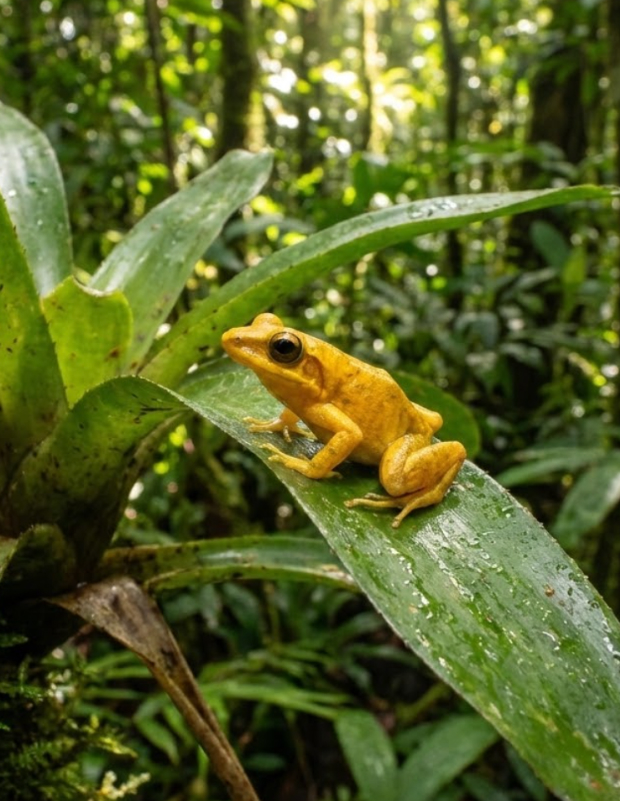
Unlike most Puerto Rican coquí species, the Golden Coquí exhibited an exceptional degree of ecological specialization. The species was associated almost exclusively with epiphytic bromeliads—particularly species of the genera Guzmania and Vriesia—which grow on trees in humid montane forests. These bromeliads provided stable microhabitats with accumulated water, constant humidity, and protection from predators, all essential elements for the frog's life cycle.
This near-absolute dependence on a specific microhabitat made the Golden Coquí highly vulnerable to any structural alteration of the forest, even when such changes did not involve complete removal of the canopy.
Reproductive Biology and Acoustic Behavior
Biologically, the Golden Coquí was notable for its ovoviviparous reproductive mode, an extremely rare trait among amphibians. Females gave birth to fully formed young rather than laying eggs, eliminating the aquatic larval stage typical of most frogs. This adaptation was closely tied to its life within bromeliads, where access to permanent bodies of water is limited.
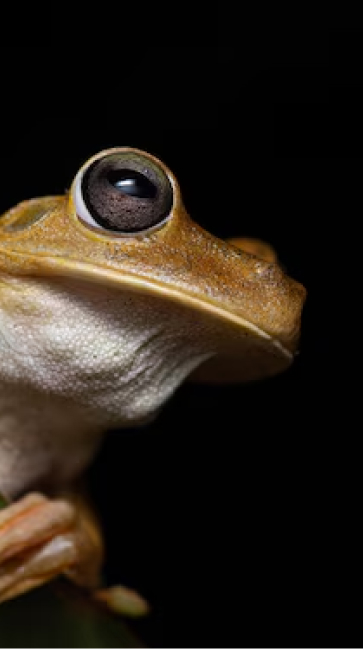
Contrary to a widespread popular belief, the Golden Coquí was not a silent species. Males produced vocalizations, although their calls were faint, short-range, and difficult to detect—especially in windy montane environments with dense vegetation. These vocalizations were used for reproductive and territorial communication but were not designed to propagate over long distances like those of the common coquí.
Limited Distribution and Final Records
Historical records indicate that the Golden Coquí had an extremely restricted distribution, with known populations only in specific sectors of the Central Cordillera, including areas of Cayey and nearby mountains. This fragmented distribution, combined with its high ecological specialization, severely limited its ability to recolonize following environmental disturbances.
According to official assessments by the U.S. Fish and Wildlife Service, the last confirmed sighting of Eleutherodactylus jasperi occurred in 1976. Despite multiple subsequent searches conducted by herpetologists and government agencies, no reliable records have been obtained since then. As a result, the species is considered extinct, although it remained formally classified for years as “possibly extinct” due to the inherent detection challenges associated with its ecology.
Considerations on the Causes of Its Disappearance
The scientific literature and conservation reports agree that no single cause has been identified for the disappearance of the Golden Coquí. Factors discussed include:
- Alteration of montane forest structure.
- Reduction of epiphytic bromeliads in certain areas.
- Local microclimatic changes.
- The inherent vulnerability associated with its extreme specialization.
It is important to emphasize that there is no conclusive evidence directly linking any single factor—such as pine plantations, emerging diseases, or introduced predators—to its extinction. The disappearance of the Golden Coquí is instead interpreted as the result of multiple environmental pressures acting on a species with very narrow tolerance margins.