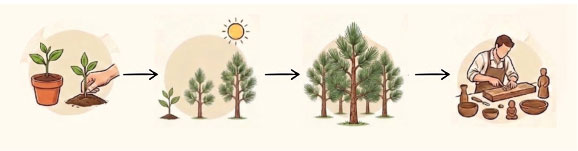
The Cayey Pine Forest, composed primarily of Pinus caribaea, represents an opportunity to develop a sustainable forest management model focused on local artisan production. This project proposes the planned use of pine planting and management to generate raw material for artisans, while simultaneously promoting forest conservation, community economic development, and the appreciation of local resources.
To establish a sustainable forest management system that enables the continuous production of Caribbean pine wood for artisan use, generating local employment, strengthening the creative economy, and promoting the responsible use of forest resources.
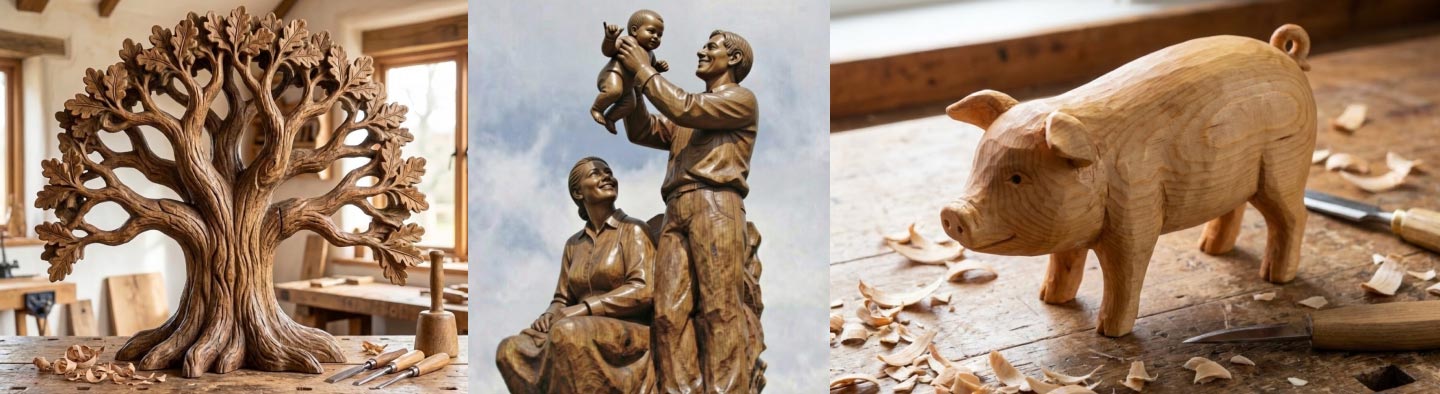
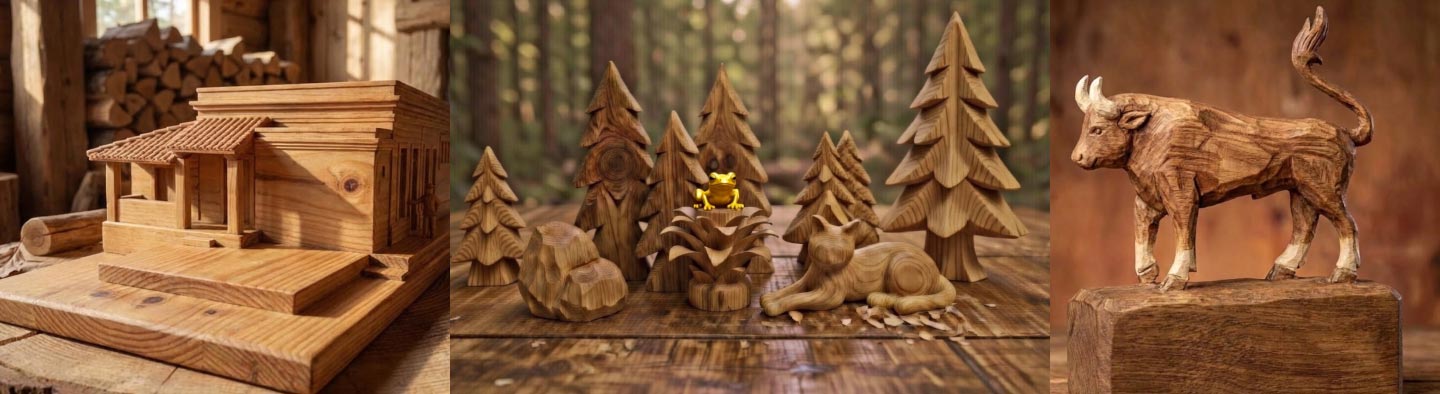
Caribbean pine is a fast-growing species that can reach suitable diameters for artisan use in a relatively short period (8 to 12 years). Its wood is lightweight, easy to work with, and suitable for carving, turning, and the creation of decorative objects, souvenirs, toys, boxes, and utilitarian pieces. Currently, much of the forest's potential value is not utilized locally. Transforming the wood into artisan products multiplies its economic and cultural value.
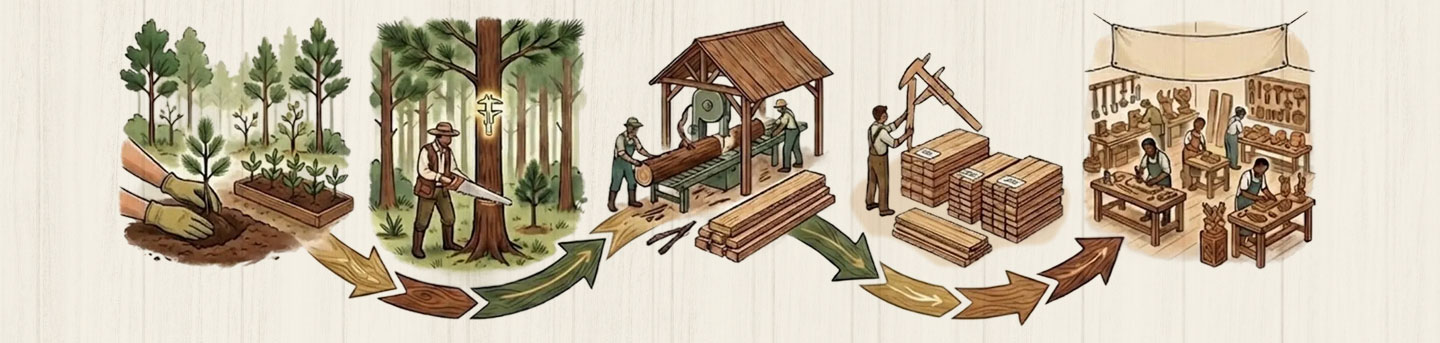
The project includes:

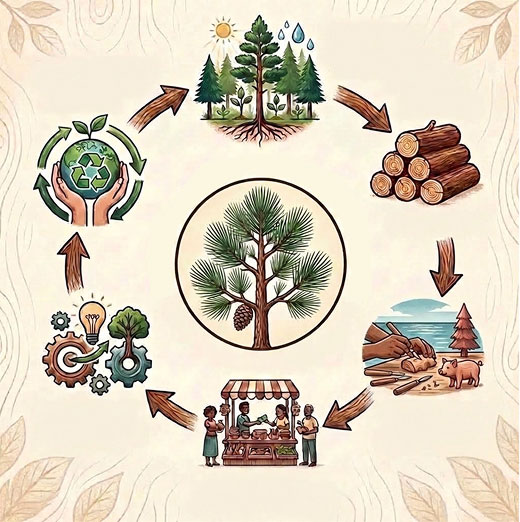
The project is based on a continuous cycle of planting, management, and harvesting, avoiding intensive exploitation and ensuring the long-term availability of the forest resource. Using pine for artisan production allows for shorter, low-impact harvesting cycles compared to industrial or structural uses.
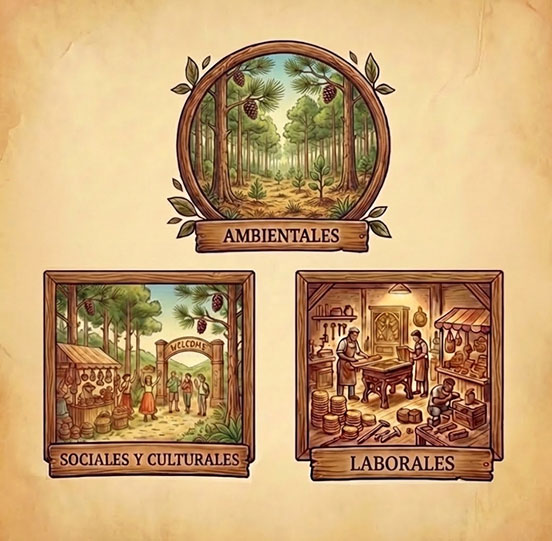
To transform the Cayey Pine Forest into a model of local bioeconomy, where the forest resource is converted into high-value artisanal products, strengthening the community economy while protecting and renewing the forest for future generations.