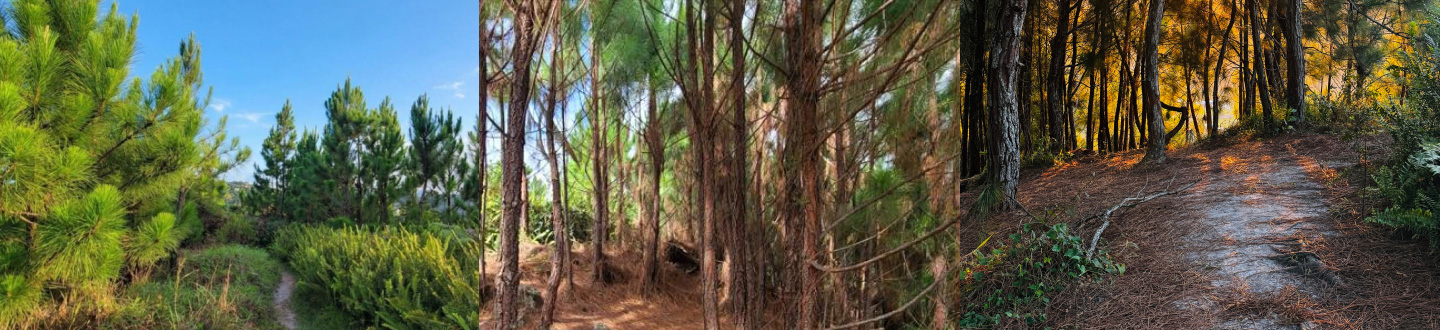
Monte El Gato is located within the geological domain of Puerto Rico's Central Cordillera, whose basement is composed primarily of volcanic and volcaniclastic rocks formed during the Cretaceous as part of the island-arc system that gave rise to Puerto Rico [1]. This volcanic arc developed in an oceanic subduction setting, producing a complex succession of lava flows, tuffs, volcanic breccias, and associated sediments.
The elevation of Monte El Gato (≈815 m, with locally higher points according to digital models) and its relative position within the Sierra de Cayey make it an effective site for intercepting atmospheric moisture transported by the predominant northeasterly trade winds. As these humid air masses ascend the mountain slopes, they cool adiabatically, leading to condensation, the formation of low clouds, and orographic precipitation [1][3].
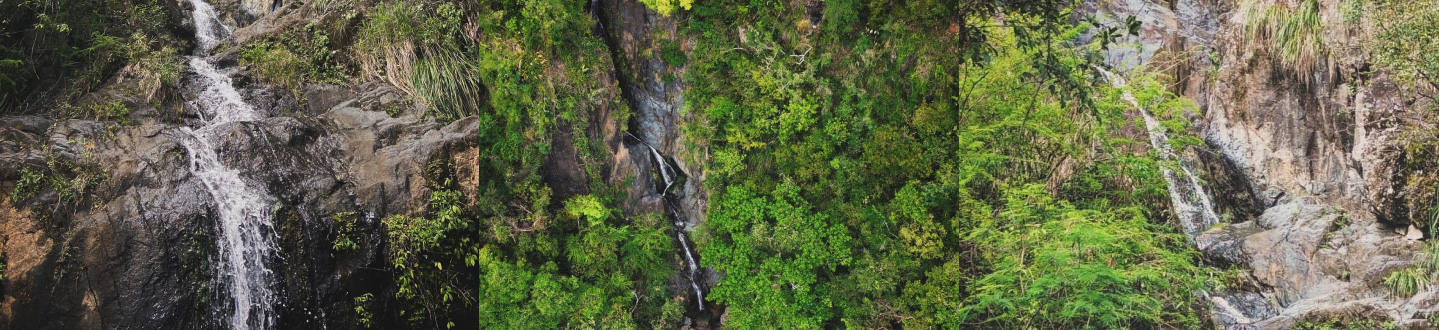
The area's relief is irregular and rugged, characterized by steep slopes, rounded ridges, and a network of small mountain streams that drain locally into larger watersheds. These streams have short courses, variable gradients, and a hydrologic regime strongly influenced by local rainfall and atmospheric moisture.
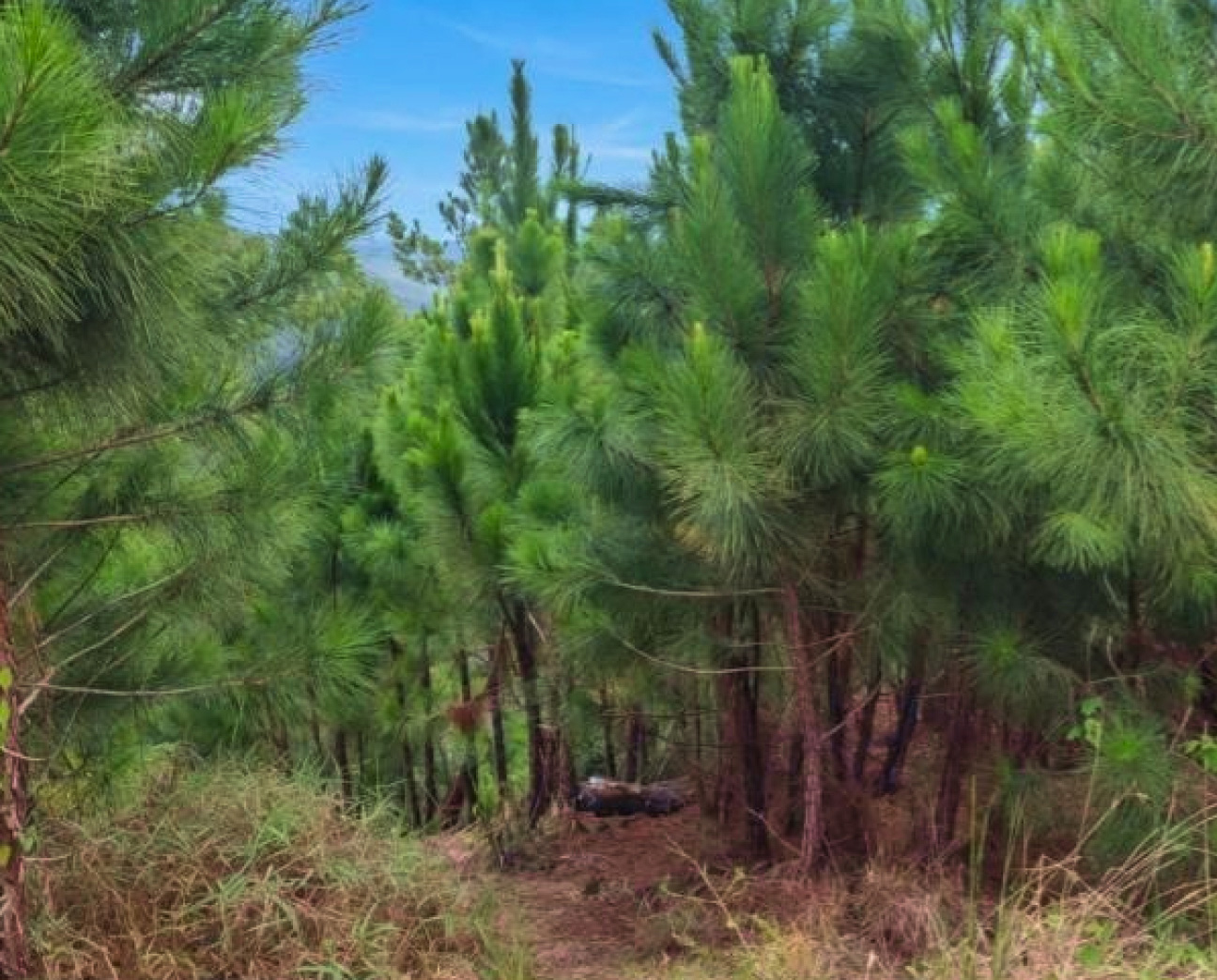
The surrounding landscape includes additional peaks and ridges of the Sierra de Cayey, sectors associated with the Carite State Forest, and adjacent lands with varying degrees of human management. This combination of rugged topography and dense vegetation contributes to the environmental heterogeneity of the area.
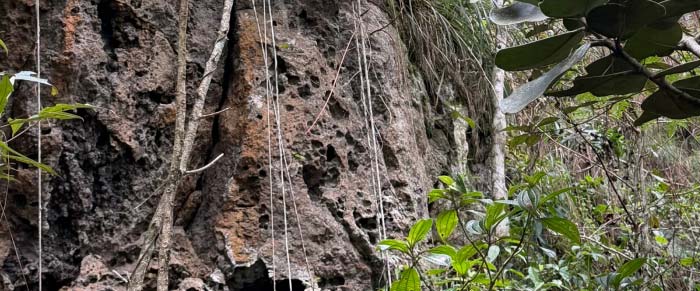
Following the formation of the volcanic arc, these units were intruded by igneous bodies associated with the San Lorenzo Batholith, one of the principal intrusive complexes in Puerto Rico [2][3]. This batholith is composed mainly of diorites, quartz-diorites, and related rocks, and was emplaced at shallow to intermediate crustal depths.
The intrusion of these bodies produced:
The interaction between the Cretaceous volcanic rocks and the intrusive bodies of the batholith is fundamental for understanding the distribution of alteration and mineralization in the Monte El Gato area.
As a direct consequence of the intrusive activity, a localized zone of hydrothermal alteration developed, informally known as the Monte El Gato Belt. This belt represents a corridor where hot fluids circulated through fractures, faults, and structural weaknesses, altering the original minerals of the host rock [2][4].
Typical characteristics of this alteration include:
This type of alteration is consistent with low- to moderate-temperature hydrothermal systems associated with dioritic intrusions, widely documented in the mountainous interior of Puerto Rico [4].
Within the Monte El Gato Belt, Quebrada La Mina represents one of the clearest surface expressions of the hydrothermal system. From a geological and hydrological perspective, the stream drains areas where the rocks show evident signs of alteration, including:
Mechanical transport by fluvial erosion has concentrated these materials along the streambed, explaining the recurrent presence of black sands and other mineral indicators visible to the naked eye [3][4].
The toponymy “Quebrada La Mina” reflects a collective memory associated with real mining exploration activities, documented in various regions of Puerto Rico's interior during the 19th and early 20th centuries. Historical reports and USGS assessments indicate that, although Puerto Rico never developed large-scale metallic mining, numerous prospecting attempts did occur—particularly targeting copper and gold—in areas affected by hydrothermal alteration [4][5].
In the surroundings of Monte El Gato, reports describe:
all of which are typical features of low-intensity exploration efforts carried out for geological reconnaissance rather than industrial extraction.

The minerals identified or inferred from regional studies include:
The integration of the Cretaceous volcanic framework, the intrusions of the San Lorenzo Batholith, and the resulting hydrothermal alteration allows Monte El Gato to be understood as a coherent geological system in which terrain structure, mineralization, and hydrology are closely interconnected. This context explains both the geology observable at the surface and the history of small-scale mining exploration associated with the area.